PORT-OF-SPAIN – The Caribbean Natural Resources Institute (CANARI) convened its regional Partners Forum, “Towards climate justice in the Caribbean,” over January 19-20 in Barbados. The Forum brought together over 85 participants, including members of the Caribbean Climate Justice Alliance and other frontline communities, climate defenders and advocates. They were joined by leaders of regional technical agencies working on climate change, experts in climate finance and law, the media, development partners, and philanthropic organisations supporting climate and environmental justice.
Participants discussed strategies to develop and deepen collaborations to address climate justice in the Caribbean through sessions focused on understanding climate change as a human rights issue and exploring lived realities of those facing climate injustices at the local level in the Caribbean. The Forum also examined recent Global Advisory Opinions on climate justice and implications for the Caribbean legal context, and how justice can be delivered through climate finance for the Caribbean.
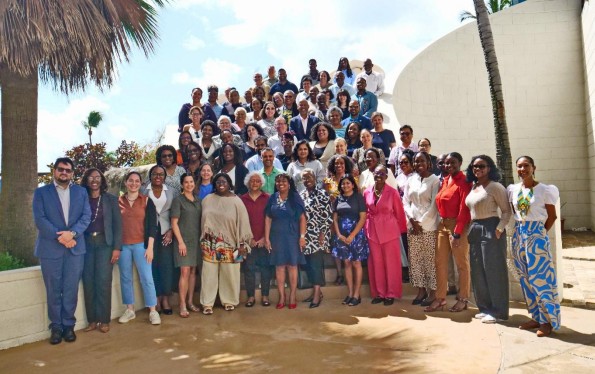
In opening remarks to the Forum, CANARI’s Chair, Mr Cletus Springer, emphasised that, “We must commit to and call for stronger action to address climate change as an issue of climate justice, where we are calling for equity and fairness in terms of who is responsible for causing climate change, who benefits, who is harmed, and how human rights are impacted. Climate justice must challenge structural power disparities and aim to reduce marginalisation, exploitation and oppression.”
Throughout the Forum, participants recognised that climate injustice occurs from the global to local levels, where the legacy of colonialism as well as ongoing imperialism and extractive capitalism drive power imbalances and oppressions which underly inequities and injustices.
In her presentation, the United Nations Special Rapporteur on Climate Change and Human Rights, Professor Elisa Morgera, explained that “The climate crisis is a human rights crisis,” affecting a range of economic, social, civil and political substantive and procedural rights. She further highlighted that “Climate injustice compounds every other injustice,” cautioning that climate responses which fail to address human rights risk entrenching vulnerabilities, leaving those most in need furthest behind. Ms Christine Samwaroo, a climate defender from the Breadfruit Collective in Guyana, stressed that “Real climate justice does not benefit a few at the top; it centres communities. It protects all people, especially those most marginalised.”
During the Forum, case studies were examined to understand different forms of climate injustice experienced by Indigenous people, youth, women and gender-diverse groups, and local communities. These discussions explored impacts on identity, culture, food systems, livelihoods, and voice in governance. One session revealed that “climate justice cannot be achieved without visibility, voice, and protection for those who speak, create, and resist. But fear of retaliation, economic vulnerability, and informal censorship are limiting the ability of artists, cultural workers, and community voices to hold power to account and to articulate the lived realities of climate harm. Without deliberate investment in cultural expression, protection of voices, and recognition of noneconomic loss, climate justice risks becoming a technocratic project disconnected from people’s lives.” This was according to Carole Excell, Vice Chair of the Committee to Support Implementation and Compliance and Environmental Defenders Rapporteur for the Escazú Agreement (the Regional Agreement on Access to Information, Public Participation and Justice in Environmental Matters in Latin America and the Caribbean), who served as one of the rapporteurs for the Forum.
The Honourable Winston Anderson, President of the Caribbean Court of Justice (CCJ), addressed the legal dimensions of climate justice, noting that the Caribbean can use the recent Advisory Opinions issued by global courts as a basis for litigation in domestic and international courts against those who are responsible for climate change. Advisory Opinions issued by the International Court of Justice, the Inter-American Court of Human Rights, and the International Tribunal for the Law of the Sea elevate climate protection to the level of a fundamental human right and reinforce the legal responsibility of States to address climate change, including their obligation to regulate corporate activities in their jurisdictions. President Anderson noted, however, that attributing harm remains a key challenge that will need to be addressed through increasing support for scientific research.
Discussions on justice in climate finance emphasised the need for reform of the existing systems that exacerbate vulnerability and promote dependency. While participants explored how to better understand and use existing institutions for funding, there was strong recognition that disruption and innovation must remain on the agenda for achieving just climate finance. Partnerships with civil society and local community organisations were seen as critical for ensuring that finance reaches those who need it most.
Participants commended the Forum as an important step in deepening shared understanding and catalysing collective action on climate justice in the Caribbean. Mrs Anette Sanford, Chief of the Kalinago Council of Dominica, affirmed that “The discussions, shared experiences, and knowledge exchanged during the Forum were invaluable and have further strengthened my understanding of the challenges facing Indigenous Peoples in the context of climate change. I am especially appreciative that the Kalinago community was highlighted during the Forum. This recognition is meaningful to our people and contributes to greater visibility, understanding, and advocacy for the realities we face.”
The Forum was held with financial support from the Open Society Foundations, Clara Lionel Foundation, Legal Empowerment Fund, ClimateWorks Foundation, Panta Rhea Foundation, and in collaboration with the Caribbean Environmental Law Unit, Faculty of Law, The University of the West Indies, Cave Hill Campus and Climate Analytics Caribbean.
